For health systemsNo coding required

Your hospital’s apps,
built by your hospital.

No coding required. The tools your nurses, rev-cycle and operations teams keep asking for — specified from what they already have, signed off by the people you choose, and shipped to web, desktop and phone on one OS.

Cedar Hollow Health · Bed Board
1 · What you bring

Calls, emails, notes

Screenshots, links, a photo of the paper form. Drop in whatever you already have.

2 · The spec

One blueprint, signed off

Spec Studio reads all of it and draws one spec, every decision cited to where it came from. Nothing is built until it’s approved.

3 · Your app

Bed Board

App Factory builds it from the spec in Cedar Hollow Health’s own brand — for web, desktop and phone.

Cedar Hollow Health, Alder Point Medical and Kestrel Valley Health are example health systems.
Your stack today

Your current stack is a spreadsheet.
None of it is yours.

Stale renewal dates. Owners who left in 2023. Feature requests nobody remembers submitting. It isn’t a vendor list — it’s a map of the decisions you’ve already lost leverage on.

  1. Renewals are trapsWhen a vendor raises rates or sunsets a feature, your data is their leverage.
  2. Feature requests stall in queuesVendors build for their biggest customers. Your workarounds become permanent.
  3. HIPAA is a screenshot jobThe auditor asks “who could see this PHI?” and you screenshot twelve admin consoles.

Migrate · early access

It’s finally time to migrate
those 20-year-old Access databases.

The bed tracker, the OR schedule, the credentialing log — built in 2004 by someone who has since left, running on a PC under a desk, holding patient data with no audit trail. Its tables become a real app’s database, its rows load after a dry-run preview — and not one row is ever sent to an AI model.

The hospital of the future

It runs on one OS.
It gets there one renewal at a time.

Four hundred vendor systems today. Each one leaves on its own renewal date — no big-bang cutover — and what it did becomes an app you own. The systems of record stay, connected.

Year2026
Vendor systems400
Apps you own0
An illustration of one health system over five years.
EHRERPPACSLABPHARMACYPAYROLLNURSE CALLBADGE ACCESSYOUR OS202620272028202920302031today: 400 vendor systemsone department, one appthe first renewal wavenurses are building nowthe EHR stays, connectedone OS
Everyone in the building

One hospital, five people.
Each one sees only their apps.

The charge nurse, the rev-cycle analyst, the patient at home, the referring physician, the volunteer at the front desk. One app, one sign-in — and each person opens it to the apps that are theirs. The public gets the public app.

same hospital, five people
  1. A hospital volunteer smiling as she points a visitor the right way across the lobby
    Visitors
    Public app · 3 apps
    Ruth, front desk
  2. A woman in her seventies in her kitchen at home, mug in one hand and her phone in the other
    Patients
    Public app · 4 apps
    June, at home
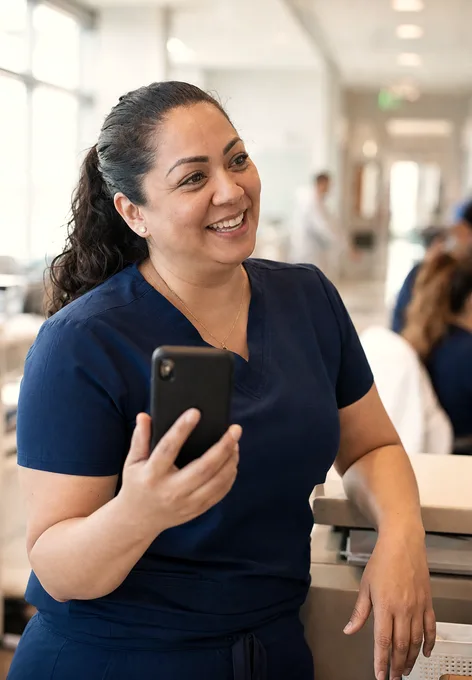
  3. A charge nurse in navy scrubs laughing mid-conversation at the nurses’ station, phone in hand
    Clinical
    9 apps
    Ana, charge nurse · 4 West
  4. A revenue-cycle analyst leaning back at his desk, mid-call on his phone
    Operations
    12 apps
    Marcus, rev cycle
  5. A physician in a white coat walking a clinic corridor, phone in his lowered hand
    Partners
    3 apps
    Dr. Okafor, referring
Cedar Hollow Health, its people and its apps are examples.
Governance

Gates at every step in the development lifecycle.
Maximum control for highly regulated industries.

Choose the gates you want — the requisition, the spec, the build, security, production. Each one is enforced in the code, not in a policy PDF, and every decision lands in one trail you can hand an auditor.

turn a gate on in watch mode first —
see what it would have blocked
  1. Dr. A. RahmanCMIO · sponsor
    APPROVEDrequisition · 08:12
    New app
  2. K. OseiNursing informatics
    APPROVEDspec rev A · 09:41
    Spec sign-off
    R. Patel asked for it.
    R. Patel can’t approve it.
  3. J. TranIT applications · any 1 of 3
    APPROVEDhand-off to build · 10:05
    Build
  4. Latest scan 11:240 critical · 0 high
    CLEAREDsecurity posture · 11:30
    Security
    no scan yet? blocked.
    no scan is not a clean scan.
  5. M. Lee · S. GrantCISO · Compliance
    APPROVED · 2 OF 2commit a41f9c2 · 14:06
    Production
    a41f9c2 is approved.
    b7e0d13 has to ask again.
Governance auditEvery governance decision in your org, in one trail you can hand an auditor.
TimeGateResultWhoWhat
08:12New appClearedDr. A. RahmanBed Board requisition, sponsor approved
09:41Spec sign-offClearedK. Oseispec rev A
10:52SecurityBlocked—release held: no completed scan
11:30SecurityClearedscan 11:240 critical, 0 high
14:06ProductionClearedM. Lee, S. Grantcommit a41f9c2, 2 of 2
14:31ProductionBlockedR. Patelcommit b7e0d13 has no approval
People and apps are examples. Gates are off until your organization turns them on.
Born compliant

Patient data never leaves quietly.
Every crossing gets a receipt.

Declare HIPAA and your organization fails closed: patient data may go only where you approved and a BAA covers it. What goes to an AI model is redacted first, and every crossing is receipted before the call — in a chain that shows if anyone edits the past.

Governance, in the product

Your approval committee,
built into the software.

Org HQ ▸ Governance. Four screens your compliance officer will actually open.

Org HQ ▸ Governance ▸ Gates
Every lifecycle gate — its governor, approvers, and enforcement — in one registry.
New app
Spec sign-off
The rule: Before anything is built, at least 2 of these people must approve the spec.
Who can approve: Dr. A. Rahman · K. Osei · J. Tran
Kept in the loop — Notified of every request and decision — they don’t approve.
Changes save automatically.
Security posture — block a production release while serious findings are open
Security scan — approve running a scan or pen testOff
Org HQ ▸ Governance ▸ Approvals Inbox
PendingHistory
Waiting on your decision (3)
Bed Board — launch to production1 of 2 approved
commit a41f9c2 · requested by R. Patel · 13:58
Optional comment…
RejectApprove
OR Schedule — schema changeadds a column
Credentialing — access changegrant to 4 West managers
Org HQ ▸ Governance ▸ Audit
Every governance decision in your org in one trail you can hand an auditor.
Category ▾From dateActor, gate, app, or summary…
14:31ProductionBlockedb7e0d13 · no approval
14:06ProductionCleareda41f9c2 · M. Lee, S. Grant
11:30Security postureCleared0 critical, 0 high
10:52Security postureBlockedno completed scan
09:41Spec sign-offClearedspec rev A · K. Osei
Org HQ ▸ Governance ▸ Data Boundary
Your data boundary
Everything below is measured, not scored.
Regime packsHIPAAAdd regime
Enforce the boundaryEnforcing — regulated data fails closed
Approved destinations — The only places data may go.
AI model · dedicatedBAA on file
Email deliveryBAA on file
you can’t approve your own request · an approval covers one exact commit, once
any one · at least N · all of them — you set the quorum
hand this to your auditor
declare HIPAA and it fails closed by default
Gates are off until your organization turns them on; the people, apps and times here are examples.
Real software

Build an app once.
Ship it to every device.

One build becomes a web app at your own address, a signed desktop app, and native apps on both phones. No second codebase, no separate mobile team — and every surface carries the same commit, so they cannot drift apart.

One version, four placesEvery surface comes off the same build, so the web, the desktop and both phones cannot drift apart. The commit is the version.
A regulation changes TuesdayThe affected app is re-specified, re-tested and re-shipped inside the week — every surface at once, because they all come from one build.
No second codebaseThe phone apps are rendered natively from the same app, not hand-written twice. Nobody maintains a separate mobile team to keep them in step.
The desktop app is signed and notarized for macOS and runs the app’s own surface in a native window. Bed Board and Cedar Hollow Health are examples.
The new economics of healthcare

Nobody understands hospital workflows
like a hospital.

Not us. Not the EHR. Not the vendors. Healthcare software has always been built by outsiders and sold to the experts. This inverts it: built by the people who run the floor, and installed by their peers — arriving in that hospital’s own brand, on that hospital’s own OS.

01You build itThe discharge-planning tool your team made because nothing on the market matched how your floors actually run.
02It worksProven on your patients, your staff, your throughput numbers — the kind of evidence no vendor demo can fake.
03Another hospital installs itIt arrives in their brand, on their OS, governed by their gates. Your price, your revenue — when the marketplace opens.
The marketplace is not open yet — this is where it goes. Cedar Hollow Health, Alder Point Medical and Discharge Planner are examples.

See your own stack first.

The free stack assessment maps your vendors, your spend, your overlap, and the five-year rent-vs-own curve — on your numbers, before anyone asks you to believe anything on this page.