For colleges and universitiesNo coding required

Your campus’s apps,
built by your campus.

No coding required. The tools your registrar, advising and facilities teams keep asking for — specified from what they already have, signed off by the people you choose, and shipped to web, desktop and phone on one OS.

Fairmount State University · Transfer Credit
1 · What you bring

Calls, emails, notes

Screenshots, links, a photo of the paper form. Drop in whatever you already have.

2 · The spec

One blueprint, signed off

Spec Studio reads all of it and draws one spec, every decision cited to where it came from. Nothing is built until it’s approved.

3 · Your app

Transfer Credit

App Factory builds it from the spec in Fairmount State University’s own brand — for web, desktop and phone.

Fairmount State University, Northline College and Harborview Community College are example institutions.
Your stack today

Your current stack is a spreadsheet.
None of it is yours.

Stale renewal dates. Owners who left in 2023. Feature requests nobody remembers submitting. It isn’t a vendor list — it’s a map of the decisions you’ve already lost leverage on.

  1. Renewals are trapsWhen a vendor raises rates or sunsets a feature, your data is their leverage.
  2. Feature requests stall in queuesVendors build for their biggest customers. Your workarounds become permanent.
  3. FERPA is a screenshot jobThe auditor asks “who can see student records?” and you screenshot twelve admin consoles.

8:01 a.m. on registration day

Everyone arrives at one door
in the same second.

Registration, holds, waitlists, housing, parking, dining — all of it funnels through the one system nobody is allowed to change. The morning it buckles, every office on campus is blind at once. An app that doesn’t have to live in the SIS shouldn’t. Give the queue, the hold and the waitlist their own app, and the system of record goes back to doing the one job only it can do.

Clock7:58
In the queue0
Waiting0:00
Gave up0
An illustration of one morning. The bars are drawn, not measured.
registration opensthe one systemRegistrarAdvisingBursarHousingFacilitiesminutes degraded, each registration morningfive apps, five doors. the SIS keeps the one job only it can do.
Migrate · early access

It’s finally time to migrate
those 20-year-old Access databases.

The transfer-equivalency table, the room-booking database, the advising-hold log — built in 2004 by someone who retired in 2019, running on a PC in the registrar’s back office, holding student records with no audit trail. Its tables become a real app’s database, its rows load after a dry-run preview — and not one row is ever sent to an AI model.

The university of the future

It runs on one OS.
It gets there one renewal at a time.

Three hundred and eighty campus systems today, most of them bought by a department nobody told IT about. Each one leaves on its own renewal date — no big-bang cutover, no summer of hell— and what it did becomes an app you own. The systems of record stay, connected.

Year2026
Campus systems380
Apps you own0
An illustration of one university over five years.
SISLMSERPLIBRARYID CARDPAYROLLCRMDEGREE AUDITYOUR OS202620272028202920302031today: 380 campus systemsone office, one appthe first renewal waveadvisors are building nowthe SIS stays, connectedone OS
Desire paths

The route people actually take
is the app you should build.

Every campus has them: the shared spreadsheet, the group text, the form somebody stood up in an afternoon, the email to the one person who knows. They exist because the paved route goes the long way round, through a system nobody can change. Don’t pave over them — pave them.The app worth building is the one people are already using badly.

THESYSTEMRegistrarAdvisingBursarHousingFacilitiesLibrarythe shared spreadsheetthe group texta Google Forman email to Dalea sticky note on a monitorsomeone walks over and askssix shortcuts. six apps nobody had to invent.
Everyone on campus

One university, five people.
Each one sees only their apps.

The student in the library, her advisor, the registrar, the facilities lead crossing the quad, the IT director on a call. One app, one sign-in — and each person opens it to the apps that are theirs. A student never sees the registrar’s queue.

same campus, five people
  1. A student between library shelves looking up with a small delighted smile, phone in hand
    Students
    Student app · 6 apps
    Amara, junior
  2. An academic advisor sitting on the edge of his desk, mid-conversation with a student, phone in one hand
    Advising
    8 apps
    Ben, academic advisor
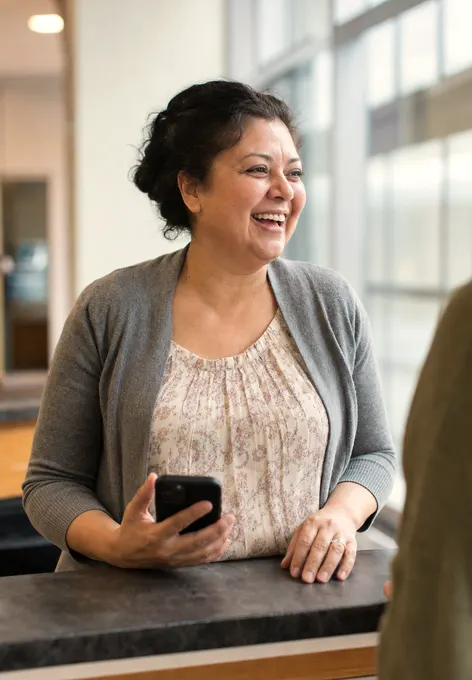
  3. A registrar at the service counter laughing at something the student across from her just said
    Registrar’s office
    11 apps
    Elena, registrar
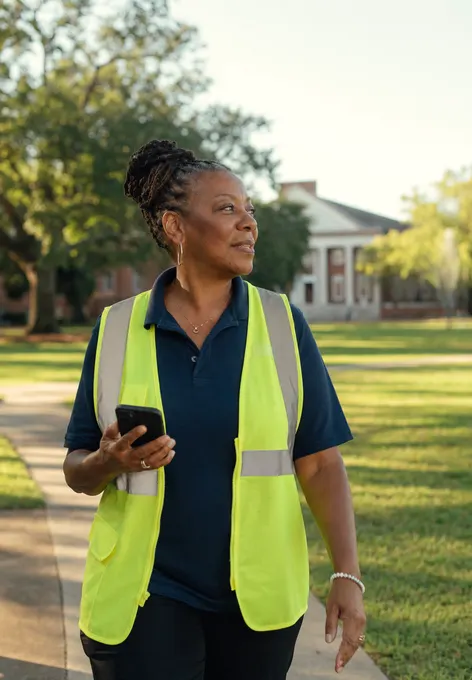
  4. A campus facilities lead in a hi-vis vest walking the quad in morning light, phone at chest height
    Facilities
    9 apps
    Yvonne, facilities lead
  5. A university IT director leaning back at his desk mid-call, grinning at something the caller said
    IT
    12 apps
    Raj, IT director
Fairmount State University, its people and its apps are examples.
Governance

Gates at every step in the development lifecycle.
Maximum control for highly regulated industries.

Choose the gates you want — the request, the spec, the build, security, production. Each one is enforced in the code, not in a governance charter, and every decision lands in one trail you can hand an auditor, a system-wide review or the board.

turn a gate on in watch mode first —
see what it would have blocked
  1. Dr. P. WhitfieldProvost’s office · sponsor
    APPROVEDrequest · 08:12
    New app
  2. E. NavarroRegistrar
    APPROVEDspec rev A · 09:41
    Spec sign-off
    An advisor asked for it.
    An advisor can’t approve it.
  3. J. KimEnterprise applications · any 1 of 3
    APPROVEDhand-off to build · 10:05
    Build
  4. Latest scan 11:240 critical · 0 high
    CLEAREDsecurity posture · 11:30
    Security
    no scan yet? blocked.
    no scan is not a clean scan.
  5. M. Ibrahim · S. DoyleCISO · Registrar
    APPROVED · 2 OF 2commit 7d3b1e8 · 14:06
    Production
    7d3b1e8 is approved.
    c92f004 has to ask again.
Governance auditEvery governance decision in your org, in one trail you can hand an auditor.
TimeGateResultWhoWhat
08:12New appClearedDr. P. WhitfieldTransfer Credit request, sponsor approved
09:41Spec sign-offClearedE. Navarrospec rev A
10:52SecurityBlocked—release held: no completed scan
11:30SecurityClearedscan 11:240 critical, 0 high
14:06ProductionClearedM. Ibrahim, S. Doylecommit 7d3b1e8, 2 of 2
14:31ProductionBlockedT. Brennancommit c92f004 has no approval
People and apps are examples. Gates are off until your institution turns them on.
Born compliant

Student records never leave quietly.
Every crossing gets a receipt.

Declare FERPA and your institution fails closed: an education record may go only to a destination you approved and designated a school official. What goes to an AI model is redacted first, and every crossing is receipted before the call — in a chain that shows if anyone edits the past.

Governance, in the product

Your approval committee,
built into the software.

Org HQ ▸ Governance. Four screens your compliance officer will actually open.

Org HQ ▸ Governance ▸ Gates
Every lifecycle gate — its governor, approvers, and enforcement — in one registry.
New app
Spec sign-off
The rule: Before anything is built, at least 2 of these people must approve the spec.
Who can approve: Dr. A. Rahman · K. Osei · J. Tran
Kept in the loop — Notified of every request and decision — they don’t approve.
Changes save automatically.
Security posture — block a production release while serious findings are open
Security scan — approve running a scan or pen testOff
Org HQ ▸ Governance ▸ Approvals Inbox
PendingHistory
Waiting on your decision (3)
Bed Board — launch to production1 of 2 approved
commit a41f9c2 · requested by R. Patel · 13:58
Optional comment…
RejectApprove
OR Schedule — schema changeadds a column
Credentialing — access changegrant to 4 West managers
Org HQ ▸ Governance ▸ Audit
Every governance decision in your org in one trail you can hand an auditor.
Category ▾From dateActor, gate, app, or summary…
14:31ProductionBlockedb7e0d13 · no approval
14:06ProductionCleareda41f9c2 · M. Lee, S. Grant
11:30Security postureCleared0 critical, 0 high
10:52Security postureBlockedno completed scan
09:41Spec sign-offClearedspec rev A · K. Osei
Org HQ ▸ Governance ▸ Data Boundary
Your data boundary
Everything below is measured, not scored.
Regime packsHIPAAAdd regime
Enforce the boundaryEnforcing — regulated data fails closed
Approved destinations — The only places data may go.
AI model · dedicatedBAA on file
Email deliveryBAA on file
you can’t approve your own request · an approval covers one exact commit, once
any one · at least N · all of them — you set the quorum
hand this to your auditor
declare HIPAA and it fails closed by default
Gates are off until your organization turns them on; the people, apps and times here are examples.
Real software

Build an app once.
Ship it to every device.

One build becomes a web app at your own address, a signed desktop app, and native apps on both phones. No second codebase, no separate mobile team — which matters most in the week when a student will only ever open the thing on a phone.

One version, four placesEvery surface comes off the same build, so the web, the desktop and both phones cannot drift apart. The commit is the version.
Registration weekThe change an office asks for on Monday is re-specified, re-tested and re-shipped inside the week — every surface at once, because they all come from one build.
No second codebaseThe phone apps are rendered natively from the same app, not hand-written twice. Nobody maintains a separate mobile team to keep them in step.
The desktop app is signed and notarized for macOS and runs the app’s own surface in a native window. Transfer Credit and Fairmount State University are examples.
The new economics of higher ed

Nobody understands a registrar’s week
like a registrar.

Not us. Not the SIS vendor. Not a consultancy billing by the hour. Campus software has always been built by outsiders and sold to the people who actually run the week. This inverts it: built by the office that lives it, and installed by their peers — arriving in that college’s own brand, on that college’s own OS.

01You build itThe waitlist tool your registrar’s office made because nothing on the market matched how seats actually free up on your campus.
02It worksProven on your sections, your students, your melt numbers — the kind of evidence no vendor demo can fake.
03Another campus installs itIt arrives in their brand, on their OS, governed by their gates. Your price, your revenue — when the marketplace opens.
The marketplace is not open yet — this is where it goes. Fairmount State University, Northline College and Waitlist Manager are examples.
Your students build here

They graduate with a transcript.
They should graduate with a commit.

A student who builds the waitlist tool for the registrar has shipped real software: specified with the office that needed it, signed off by the people who own it, and running on the university’s own OS for people who are not her classmates. The course gave her a grade. The gate gave her a name on a release. And the office still runs the app.

THE TRANSCRIPTFAIRMOUNT STATE UNIVERSITYOfficial record · A. LINDGREN · B.S. 2026CS 2400Data StructuresA−STAT 2100Applied StatisticsB+ENGL 3010Technical WritingAPSY 1010Intro to PsychologyBCS 3350DatabasesAHIST 2200Modern EuropeB+CS 4120Human–Computer InteractionAMGMT 3200OperationsBCS 4900CapstoneAa list of rooms she sat inTHE RECORD ON THE UNIVERSITY’S OSWaitlist Manager v1.3commit 7d3b1e8sponsored by the Registrar’s officeSpecE. NAVARROSecuritySCAN 11:24ProductionM. IBRAHIM · S. DOYLEin use by 4 offices · still runningLab Swap v0.9commit c41a0d6sponsored by ChemistrySpecR. OYELARANSecuritySCAN 09:02ProductionM. IBRAHIM · J. KIMin use by 1 department · still runningRide Board v2.1commit a08f512sponsored by Student LifeSpecT. HALVORSENSecuritySCAN 16:40ProductionM. IBRAHIM · P. WHITFIELDin use by 2,400 students · still runningshe didn’t build a class project. she built the waitlist.
Two separate records: the registrar decides what goes on a transcript, and this changes nothing about that. Fairmount State, its students and their apps are examples, and gates are off until your institution turns them on.

See your own stack first.

The free stack assessment maps your vendors, your spend, your overlap, and the five-year rent-vs-own curve — on your numbers, before anyone asks you to believe anything on this page.